
Up to this point, most of your writing has been informal, maybe somewhat personal. If you've produced a draft at all, it's probably quite rough and will need revision on both global and local levels.
As you produce a working draft, clusters, scratch outlines, pyramid charts, and other organizational aids can help suggest major divisions and even where to place sub points within those divisions, but unless you've identified an audience from the start, you may not have thought much about how readers will react to your writing.
Have you looked closely at the whole writing context and considered the amounts and kinds of information your readers want or need?
Have you looked closely at the whole writing context and considered the amounts and kinds of information your readers want or need? Have you thought about how to arrange your major points, including your thesis? Should it come at the beginning or the end? Should it be directly stated or implied? Have you established a consistent style in terms of tone, voice, and degree of formality. This is where cutting and pasting, substituting and rewriting, begins in earnest.
Activities
7.7 Once you've produced a working draft, exchange it with a partner or with members of your discussion group. Role playing can be helpful here. Other group members, or even the writer, if the paper is being read aloud by someone else, can anticipate possible audience responses, reacting to both style and substance.
Does one idea flow naturally into another?
Is the writer telling me what I already know?
Are examples and illustrations relevant and convincing?
Is the voice authentic?
Is the style too formal or too chummy or just right?
7.8 Consider the following model as a pattern for working through and organizing an exploratory essay. Then answer the questions that follow.
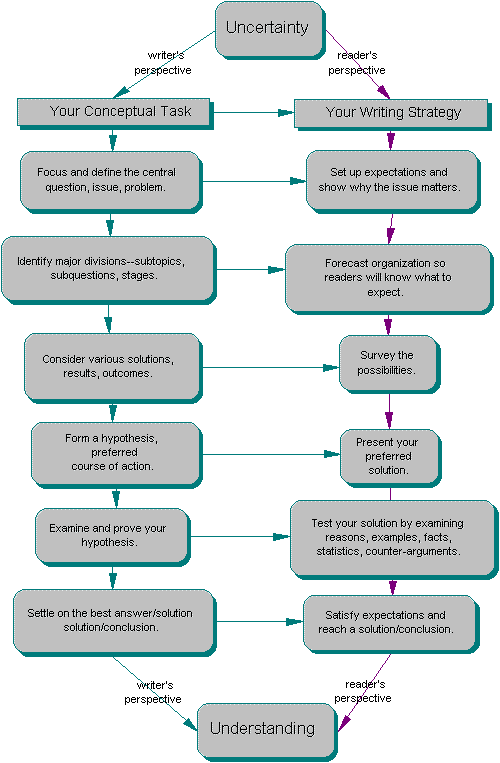
Freewrite on the following questions. First do Question 1 and discuss it with a partner. Then do Question 2.
1. Does this chart make any sense to you? Can you see how you could use any of this in your present essay or in future papers? Would you need to modify it? How? Does it at all resemble ways you've previously thought about organizing your writing?
2. Write a brief summary of the structural design of your current essay. What are the main parts? How are they related? Why are they presented in the order you have chosen? What is your writing goal for each part of the essay? How does the overall conceptual flow relate to your reader's perspective?